

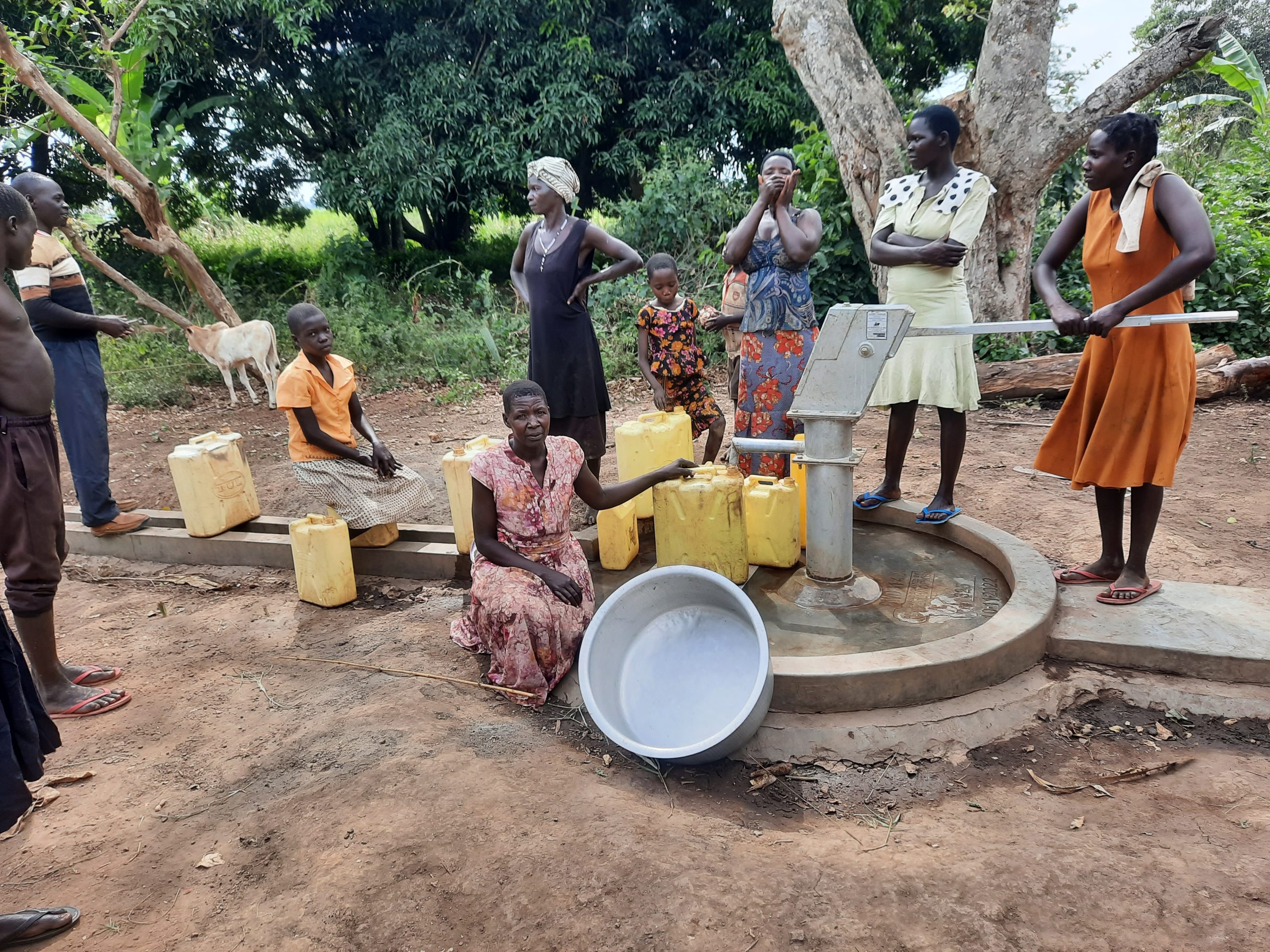
Handpumps Operation & Maintenance
WaterKit does not build, own, or rehabilitate handpumps. Instead, it provides a profit-driven, technology-enabled service model that makes existing community-owned handpumps sustainable.
Here is the breakdown of their process:
1. The Core Mechanism: Digitizing the Value Chain
WaterKit provides sustainability by digitizing the entire handpump management process through their platform, WaterKitPay. This creates “transparency, accountability & trust”.
- User Fees Management: Communities use the app to collect fees from households. Funds are aggregated and saved in a digital “Water User Committee Wallet” (Page 8).
- Payment & Repairs: When a handpump breaks, the WaterKit Mechanic raises a quotation. The Committee approves it digitally, and WaterKit procures spare parts. Payments are made digitally via mobile money.
- Preventative Maintenance: WaterKit performs routine maintenance services for a subscription fee, deducted directly from the community’s digital wallet.
2. The Operational Rules (The “Business Secret”)
WaterKit strictly avoids capital-intensive work to remain profitable. Their operational model relies on four “NOs”:
- NO Construction: They only manage handpumps built by NGOs or the government.
- NO Rehabilitation: They only onboard functioning handpumps. (Broken pumps must be fixed by NGOs/government first).
- NO Ownership: The community must fully own the handpump.
- Requires a Functional Committee: The Water User Committee (WUC) must exist and function. (WaterKit can help set one up for a fee).
3. Financial Sustainability (The Profit Model)
WaterKit ensures long-term sustainability by being “fully profitable” and “donor-independent” . They achieve this through:
- Revenue Streams: User fees, subscription fees for maintenance, and potential ASP fees or licensing .
- Profit Drivers: They focus on high collection efficiency (92% target 95%+), absorbing fixed costs across many handpumps, and clustering handpumps geographically to reduce travel costs for mechanics.
- Working Capital: They plan to use debt ($50k-$100k) to stock spare parts in regional hubs. This shifts the model from “reactive procurement” (waiting for breakdowns and payments) to “proactive readiness,” reducing downtime and keeping water flowing .
4. Scaling Sustainability
To sustain more handpumps, WaterKit uses four channels to onboard new communities:
- NGO Partnerships: NGOs do community mobilization; WaterKit handles the tech/management.
- Onboarding Grants: Grant funding covers the $200 cost to bring new communities onto the platform.
- Cost-Sharing: Community pays $100 down payment; WaterKit covers $100 and recovers it via future user fees.
- ASP Integration: Partnering with government-contracted Area Service Providers to manage handpumps under the official framework.
In summary: WaterKit provides operation and sustainability by replacing opaque cash handling and slow reactive repairs with digital financial tools, transparent reporting, and a profitable service model that ensures communities pay for maintenance proactively, mechanics get paid quickly, and handpumps remain functional
WaterKit is Uganda’s leading WaterTech providing community-driven solutions to the water sector in mostly rural and refugee communities.
Service lists
WaterKit currently provides the following services to the communities it serves.
Water User Fees Management
Preventative Maintenance Services
Reactive Repair Services
Water User Communitte Formation and Management
Hand pump mechnics management
(256) 788 486269
Anytime can sound like an open invitation to get in touch, offer 24/7 support for businesses.